
A note before we begin.
Last week I published an article on return of capital versus return on capital aimed at founders and executives raising capital across any industry. The response was strong. But a number of you (operators, investors, and advisors from across the hospitality space) came back with the same question: does this apply differently in our industry?
The answer is yes. Meaningfully so.
Which is why this version exists. Same thesis. Different world. And in hospitality, the stakes around getting this wrong are considerably higher.
The Industry Context You Cannot Ignore
Let us start with the environment you are raising capital into. Because it matters.
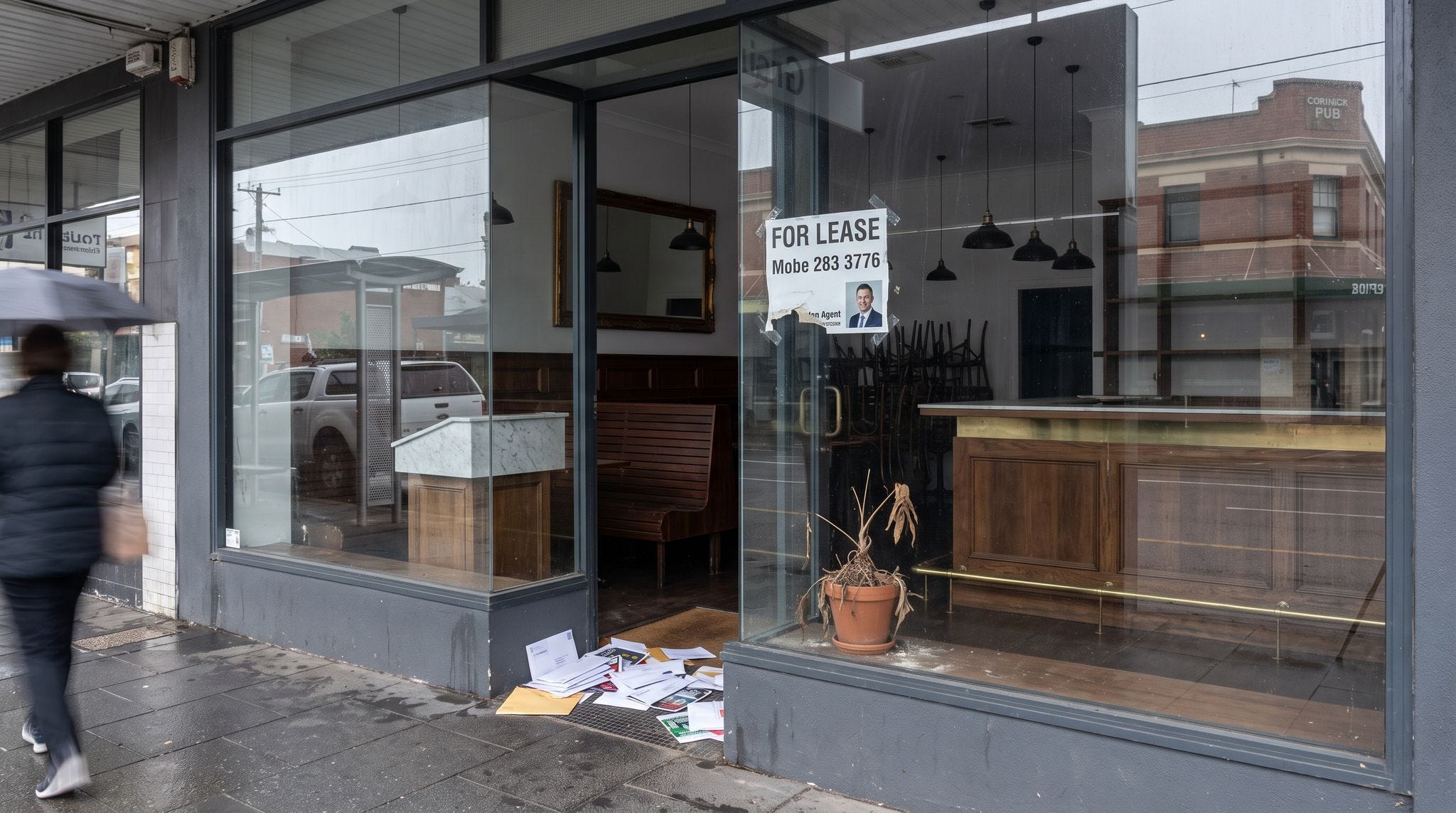
Hospitality is under genuine structural pressure across most major markets right now. The UK hospitality sector is now 14.2% smaller than it was at the start of the COVID-19 pandemic, having recorded more than 16,000 net closures over five years. In the US, 87% of operators faced increased food prices in 2024, and 88% reported higher labour costs. Consumer behaviour has shifted. A 2025 survey found that two-thirds of diners who eat out less frequently cite increasing prices as the primary reason.
This is not a temporary correction. It is a structural reset that is separating operators who built their businesses on credible financial foundations from those who built them on optimism and atmosphere.
And running parallel to this pressure is a consolidation trend that is reshaping the competitive landscape entirely.
In the hotel sector, the 10 largest groups now control 65% of US room supply, a dramatic concentration driven by decades of mergers and acquisitions that have enabled a handful of multi-brand conglomerates to dominate the market across every segment from luxury to budget. In restaurants, bars, and nightlife venues, the same dynamic is accelerating. Multi-brand hospitality groups are acquiring independent and boutique operators at pace, consolidating back-office costs, centralising procurement, and rolling multiple concepts under a single management infrastructure.
This matters for two reasons.
First, it changes the competitive environment for independent and boutique operators. You are no longer competing only on concept and experience. You are competing against organisations with structural cost advantages and distribution scale you cannot match.
Second, and more relevant to this article, it changes the investor conversation. Capital that once flowed readily into standalone concepts is increasingly asking harder questions about exit mechanics and competitive durability. An investor who watched a well-run independent get squeezed by a multi-brand operator next door has a longer memory than you might want them to have.
You are raising capital into this environment. Adjust accordingly.
The Most Expensive Mistake in Hospitality Finance
There is a particular kind of pitch that happens in hospitality.
It starts with the concept. The story. The fit-out renders. The mood board. The chef's pedigree or the operator's track record of packed houses and queues out the door.
It is compelling. It is visual. It is, in many cases, genuinely exciting.
And it almost always misses the point.
Because while the founder is selling the dream, the investor across the table is asking a question that never makes it onto a slide deck.
Will I get my money back?
Not: will this become a landmark venue? Not: will the brand scale across multiple sites? Not: will the reviews be extraordinary and the reservations impossible to get?
Those questions come later. First comes the one that matters most.
Return of capital. Not return on capital.
Why Hospitality Amplifies This
Every industry has this dynamic. But hospitality amplifies it.
Few sectors are as capital intensive at entry. The fit-out alone (before a single cover is turned, before a single cocktail is poured) can run into the hundreds of thousands, often millions. Add the lease commitment, the FF\&E, the pre-opening costs, the working capital buffer, and the staffing ramp, and you have a significant capital position sitting at risk before the doors open.
That capital belongs to someone.
In most cases, some of it belongs to an investor who did not sign up to fund a vision board. They signed up because the numbers made a credible case for getting their money back, and then some.
The problem is that hospitality operators are, by nature, concept-led thinkers. That is both their greatest strength and their most dangerous blind spot when raising capital. They fall in love with the experience they are building. Investors cannot afford to.
The Seduction of the Concept
Walk into any pitch for a new restaurant group, hotel concept, or bar venue. The concept will be immaculate. The brand story will be tight. The target demographic will be clearly defined. The Instagram potential will be obvious.
What will often be missing, or sanitised beyond usefulness, is a credible, stress-tested path to returning the investor's capital.
Not revenue projections. Not EBITDA targets that assume 80% occupancy from month four. A genuine, sober-eyed answer to the question: how does this investor get their money back, and when?
That means realistic capital recovery timelines. Honest assessment of lease obligations and what they mean if trading underperforms. Clear liquidity mechanics: whether that is a structured return, a buy-out clause, a refinance event, or an exit. It means acknowledging that hospitality is a high-failure-rate industry and demonstrating that you have pressure-tested your model against that reality.
Nearly 50% of restaurants fail within five years, with some estimates as high as 80%. Only 34.6% survive beyond ten years. Experienced investors in this space know those numbers. If your pitch does not acknowledge them, and speak credibly to how your model is built to defy them, you have already lost the room.
This is not pessimism. This is the language of credibility.
The Numbers Don't Lie. The Projections Do.
Hospitality investors, particularly those who have been in the space long enough to have lost money, know that the projections in a pitch deck are, at best, aspirational. They have seen enough optimistic revenue curves and underestimated cost lines to treat them with healthy scepticism.
What they are looking for underneath the numbers is something harder to fake: evidence that the operator understands the capital risk and has built their model around protecting it.
Return of capital is the floor. Return on capital is the ceiling. In hospitality, the ceiling gets all the attention. The floor is where deals are actually won or lost.
I have been on both sides of this in the hospitality space for decades: as an investor, as an operator, and as an advisor sitting alongside operators navigating the raise. The concepts that secured investment on the best terms were not always the most exciting ones. They were the ones where the operator had clearly done the hard thinking. Where the downside had been addressed before the upside had been sold.
Investors fund credibility first. They fund ambition second. That order matters everywhere. In hospitality, it matters more.
What Experienced Hospitality Capital Is Actually Thinking
Sophisticated investors in hospitality (family offices, private equity with sector experience, high-net-worth operators who have built and exited their own venues) are not naive about the risk profile. They understand the industry. They know the failure rates. They know what happens when a lease turns predatory in a soft trading environment.
They are not looking for guarantees. They are looking for operators who understand the investor's position and have built their pitch accordingly.
That means a clear path to liquidity. An honest view of the lease liability. A capital efficiency model that makes sense. Contingency built in, not bolted on as an afterthought. And the maturity to have the hard conversation about what happens if the numbers do not hit Year 1 projections, because they rarely do.
In private equity, the waterfall is formal: return of capital first, then preferred returns, then the carry. In hospitality investment (which is often less structured, more relationship-driven) the same instinct operates. Experienced capital does not move without a plausible path back to itself.
The Harder Truth
Most hospitality operators who fail to raise (or who raise on poor terms, or who find themselves in a deteriorating investor relationship twelve months into trading) have not failed to sell the concept.
They've failed to sell the floor.
The venue was well conceived. The operator was talented. The market was real. But somewhere in the raise, the conversation never moved from dream to discipline. And the investor, who was always thinking about return of capital even if they never said it, never got the comfort they needed.
That comfort is not built through enthusiasm about covers-per-night or average spend-per-head. It is built through the willingness to address risk directly. To show the investor that you have thought harder about their downside than they have.
In the Mis(très)s Entrepreneur Manifesto, I write about integrity and command as inseparable. In a hospitality raise, this is not abstract. The operator who walks into the room having already stress-tested their own downside scenario, and can speak to it without flinching, carries more command than the one performing a certainty they cannot yet guarantee.
Integrity is not a soft concept. It is a competitive advantage.
The Single Shift That Changes the Raise
If you are a hospitality operator seeking outside capital (for a new venue, a new concept, an expansion, or an acquisition) make this one shift.
Stop thinking like someone who needs money to build something great. Start thinking like someone who is being trusted to steward someone else's capital responsibly.
That shift changes how you build your model. How you stress-test your assumptions. How you structure the deal. How you communicate during the raise, and how you communicate when you are six months in and trading is behind forecast.
In Evolve or Be Remembered, I wrote that capital, like trust, like love, arrives later, as a delayed echo of integrity. In hospitality, where the relationship between operator and investor often outlasts the original deal, that principle is not philosophy. It is operational reality.

The hospitality industry produces some of the most compelling business concepts on earth.
It also produces some of the most expensive investor disappointments.
The difference, more often than not, is not the concept. It is whether the operator understood, and respected, the investor's most fundamental question before they asked for the cheque.
Return of capital is not the unglamorous part of the raise.
It is the entire basis on which the rest of it is allowed to happen.
Paul Lange advises owners and senior leaders in hospitality and beyond on the decisions that define commercial outcomes and organisational character. He has spent close to four decades across hospitality, finance, technology, professional services, and operating roles on five continents, on both sides of the table, with private equity and venture capital one part of it, and has taken five of his own companies through to exit. He is the creator of the Total QX™ (Total Quality Experience) and TILE Theory™ frameworks, and the author of The 20% Leader, Mis(très)s Entrepreneur Manifesto, Evolve or Be Remembered, and The Inheritance Manifesto. He runs his advisory practice, Manolutions, from the Gold Coast, Queensland. He writes InnSight because exceptional hospitality is not an accident. It is built.