
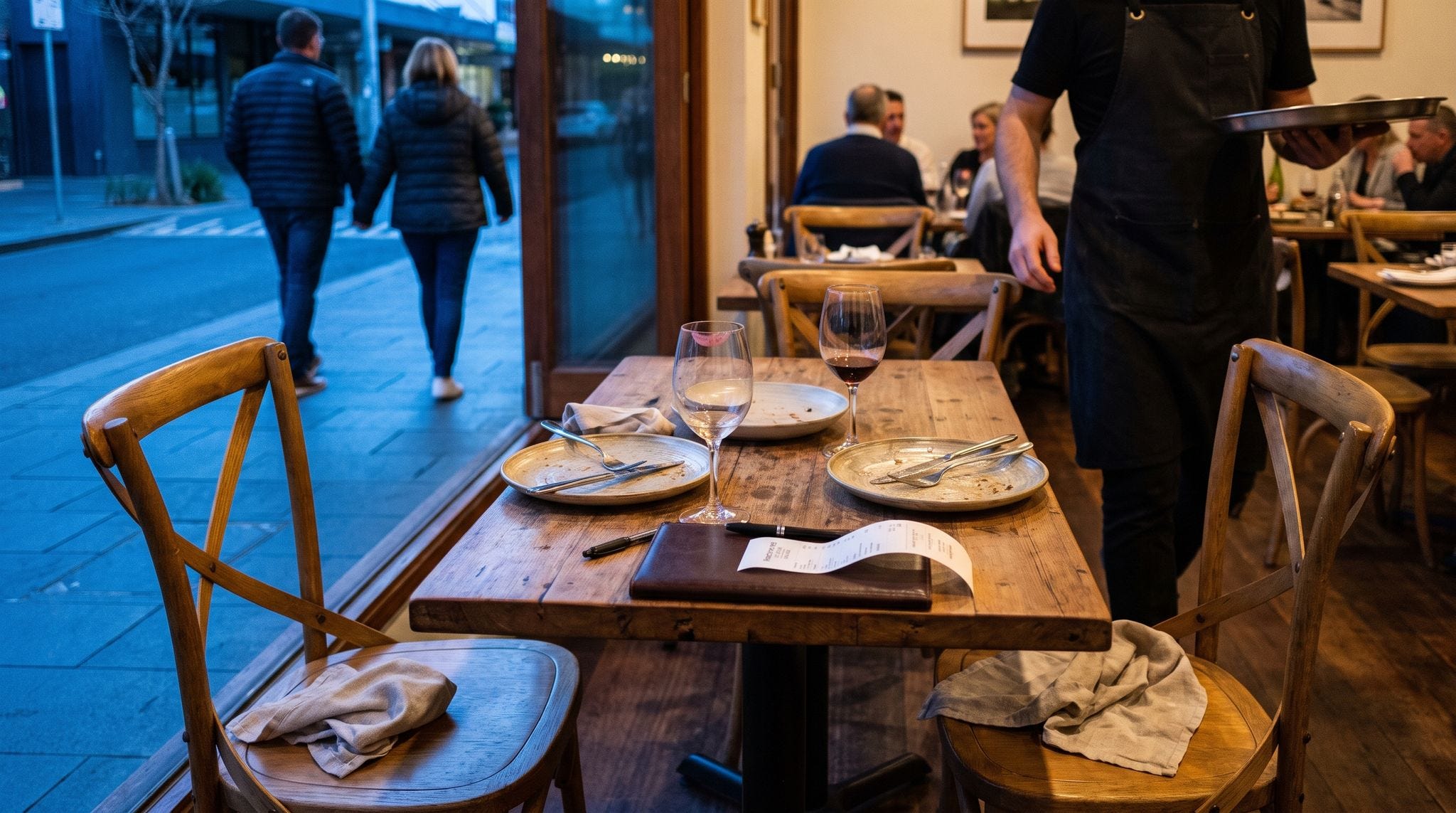
I’ve long said, no matter the industry, that the goal of any business is to give customers an awesome experience so they come back more often, spend more, and tell others to do the same.
This comes down to how you do what you do. In hospitality, that ‘how’ sits closer to the surface of the offering than in almost any other industry.
In the PE/VC world, when we drilled into the numbers behind a raise, more than 90% of businesses wanted a substantial chunk of the ask allocated to marketing to support expansion. More often than not, they did not have a marketing problem. They had a repeat-business problem, and a referral problem.
In hospitality, it is much the same. Most restaurant owners think they need more traffic. More ads. More reach. More noise. More people through the door.
Usually, they do not.
Usually, they need to get much better at earning the second visit.
That is where the real commercial game starts. Not when someone tries you once. When they decide whether you were worth coming back for.
The mistake too many operators make
The average small hospitality operation never calculates their CAC. They wouldn’t know whether each new customer is costing them $9, $90, $900 or anywhere north of that. Larger groups and corporates obviously track this more closely, but even there I have seen decisions that are so utterly commercially absurd they’d leave anyone gobsmacked.
Many hospitality businesses spend a small fortune trying to win first-time guests, but their way of doing things sucks so badly they are leaving the next visit to chance.
A guest comes in. Has a decent meal. Pays the bill. Walks out.
Nobody has designed what happens next.
No meaningful follow-up. No reason to return soon. No deliberate touchpoint that moves the relationship forward. No operational focus on turning trial into familiarity.
That is not a marketing strategy.
That is leakage.
I have seen this from both sides of the table
This pattern shows up across hospitality markets all over the world and I’ve lived it personally more times than I can count.
Even when a restaurant succeeds in building regular trade, many then damage it by becoming too relaxed with the very people they worked to earn.
This is one of the dumbest mistakes in hospitality.
You find a place you like. The food is strong. The room has energy. The service lands properly. You go back. Then you go back again. They start to know you. They remember your table. They know your drink. For a while, it feels like proper hospitality.
Then something shifts.
The welcome gets looser. The urgency drops. The attentiveness softens. Standards slide a little. Not enough to make a scene. Just enough to register.
You wait longer.
The small touches disappear.
The place starts acting as if your loyalty is now guaranteed.
“Sorry mate, we just got slammed.”
The team saves its best energy for first-timers, VIPs, influencers, or whoever looks new and exciting. Meanwhile, the loyal guest gets the operational leftovers.
That is madness.
I have heard some version of that line in city after city, country after country. Different markets. Same mistake.
At first, the guest is made to feel special because they are new.
Later, they are made to feel invisible because they are familiar.
That is where a lot of operators quietly destroy the value they worked so hard to build.
A regular is not someone to take for granted.
A regular is proof that your model worked. Proof that trust was built. Proof that the business earned a place in someone’s life, routine and wallet.
That should raise the standard, not lower it.
The guest who has been with you ten times should not feel less valued than the guest who has been with you once.
They should feel more valued.
What most operators miss
The most important sale in hospitality is not the first visit. It is the next one: earning the guest’s decision to walk back through the door again, and again, and again.
First visit creates awareness. Second visit creates familiarity. Third visit creates preference. Fourth visit starts to look like loyalty.
That is also where the trap begins. The moment an operator mistakes loyalty for something guaranteed and starts to coast, they begin dismantling the relationship they worked to build. Sometimes on that visit. Sometimes on the next.
Whether your own numbers are 30%, 40% or 50% at each step is less important than the principle. Retention compounds after repeated positive experiences.
Each strong return visit lowers friction. Builds trust. Increases familiarity. Strengthens preference.
That is why smart operators do not just ask:
How do we get more covers this week?
They ask:
How are we deliberately earning the second, third, fourth and ‘n-th’ visit?
That is the better question. It is also the more profitable one.
If repeat business is weak, stop blaming reach
If guests are not coming back after a good first experience, the first issue is not exposure.
It is experience.
Something is failing to earn the next visit.
That failure may sit in the offer. It may sit in the service. It may sit in the atmosphere. It may sit in the follow-up. It may sit in the sheer forgettability of the experience. It could also be the food was just crap or the rooms were substandard.
The point is the same. If repeat rates are weak, ask the harder question.
What, exactly, are you doing wrong?
Not philosophically. Operationally.
Is the welcome generic? Is the service inconsistent? Is the food good enough but not memorable? Is the room flat? Is the pace wrong? Is there no reason to return quickly? Is nobody on the team consciously building a relationship?
Too many operators treat retention as if it happens automatically when the basics are decent.
It does not.
Retention is not an accident. It is an outcome of design.
This is not about gimmicks. It is about sequence.
A guest should not leave a strong first visit and disappear into the street with no deliberate path back.
That does not mean throwing random discounts around.
That does not mean gimmicks for the sake of gimmicks.
It means designing the journey properly.
Recognition. Relevance. Timing. Personalisation. Consistency. Commercial intelligence. Touchpoint Experience Design.
That is where the delta is.
Because in many hospitality businesses, getting a satisfied guest back costs a fraction of what it costs to win a cold new one. Not just in dollars, but in effort, friction and risk.
The guest already knows you.
The question is whether you gave them enough reason to choose you again.
What this can look like in practice
It comes down to the power of small. The small things matter. A remembered name. A well-timed check-in. A thoughtful gesture. A reason to return that feels personal, not generic.
It starts with a human system, not a pep talk or a speech from the floor. A neighbourhood café, a high-volume casual restaurant, a fine dining room, a pub, a cocktail bar, a boutique hotel and a large full-service hotel should not all run the same playbook, but every serious venue should have one.
The point is not to copy someone else’s tactic.
The point is to understand the job each visit needs to do, then build simple operational moves around it.
By the end of the first visit, the job is RECOGNITION and a REASON TO RETURN. That starts with identification. If someone is new, the team should know. Not by guesswork. By system. Whether that sits in the booking platform, the POS, a table marker, the briefing, or a simple floor signal does not matter. What matters is that first-timers are visible and somebody owns the next step.
That next step should usually involve a manager. Not a drive-by “How is everything?” but a proper check-in with intent. Welcome them properly. Read the table. Read what they ordered. Read what kind of return invitation actually fits. Then give them a reason to come back that feels specific, not generic. That may be a glass of wine on the house next time, a dessert paired to what they ordered, a complimentary aperitif, a chef-selected appetiser, or some other low-cost but well-judged gesture. Not a lazy 20% off. A deliberate bounce-back move tied to the next experience.
This is where customer acquisition cost starts to come down: not in the ad spend, but in how effectively you earn the next visit.
On the second visit, the job is FAMILIARITY and REINFORCEMENT. Now the guest should feel remembered, not processed. That only happens if the information from the first visit actually moves. If they booked, the notes should show up in the pre-service briefing. If they walked in, somebody should still be capturing enough to make the next interaction smarter. The host should know they are back. The floor should know what matters. The manager should know what was offered last time and what the next step is.
This is where a good operator broadens the relationship. If the guest had wine, maybe the welcome-back gesture is a glass on arrival. If they loved dessert, maybe coffee and petit fours land. If they were drinks-led, maybe you guide them into a signature serve they did not try last time. If they were food-led, perhaps you steer them toward a dish that deepens their understanding of the menu. The point is not to “sell them more stuff”. The point is to make the venue feel more relevant, more personal and more worth returning to again.
By the third visit, the job is PREFERENCE. By now the venue should be starting to know who this guest is. Not in a creepy way. In a competent one. Favourite table. Preferred drink. Pace of service. Allergies. Timing. Whether they like to chat or be left alone. This is where the experience starts to feel less like service delivery and more like fit.
That does not mean you keep throwing free things at them. In fact, that can get tacky fast. The goal is not to train people to expect gifts. The goal is to reduce friction, increase relevance and make choosing you feel easy. A small surprise can still work here, but only if it feels earned and natural. By this point, precision matters more than generosity.
I have seen this across five continents, dozens of countries and countless restaurants. The places I most loved returning to were the ones that made it feel less like dining out and more like stepping into a private members’ club. They knew enough about me to make the experience feel easy, personal and worth repeating.
From the fourth visit onward, the job is CONSISTENCY. This is where many operators get lazy and start confusing familiarity with permission to coast. The guest is now known, predictable and low maintenance, so the team unconsciously shifts its best energy elsewhere. That is where loyalty starts to erode.
Long-term regulars should not get less care because they are established. They should get more consistency, more recognition and fewer unforced errors. The standard should rise, not drop. Because once a guest feels taken for granted, the relationship starts coming apart very quickly.
Restaurants with three Michelin stars, venues with five toques from Gault & Millau, and hotels that market themselves as six- or seven-star understand this. There is a myth that service should somehow be judged relative to price. In polish and detail, of course it varies. In ethos, it does not. At the root, the standard is the same whether it is delivered in a local country pub, a bustling city restaurant, or the Viceroy Bali.
That is the sequence.
Recognition. Reinforcement. Preference. Consistency.
Different venues will express it differently. The principle does not change. Build a system that helps the team recognise the guest, shape the next visit, and protect the relationship once it starts to matter.
What exceptional hospitality actually does
Exceptional hospitality does not merely convert curiosity into trial.
It converts trial into trust. Trust into preference. Preference into repeat behaviour.
That does not happen because the operator hopes it will.
It happens because every action is on purpose.
The welcome is on purpose. The service rhythm is on purpose. The recognition is on purpose. The follow-up is on purpose. The stewardship of regulars is on purpose.
That is what too many operators miss when they obsess over “marketing”.
Marketing got the guest to try you.
Experience gets them back.
Consistency keeps them.
The real question
Stop asking only how to get people in.
Start asking how to earn the next visit. Then the one after that. Then the one after that again, without letting familiarity erode standards once the guest becomes loyal.
Because the regular who stops coming usually does not leave after one bad meal.
They leave after realising their loyalty no longer matters. And they tell others when they love you, and when they leave you.

Paul Lange advises owners and senior leaders in hospitality and beyond on the decisions that define commercial outcomes and organisational character. He has spent close to four decades across hospitality, finance, technology, professional services, and operating roles on five continents, on both sides of the table, with private equity and venture capital one part of it, and has taken five of his own companies through to exit. He is the creator of the Total QX™ (Total Quality Experience) and TILE Theory™ frameworks, and the author of The 20% Leader, Mis(très)s Entrepreneur Manifesto, Evolve or Be Remembered, and The Inheritance Manifesto. He runs his advisory practice, Manolutions, from the Gold Coast, Queensland. He writes InnSight because exceptional hospitality is not an accident. It is built.